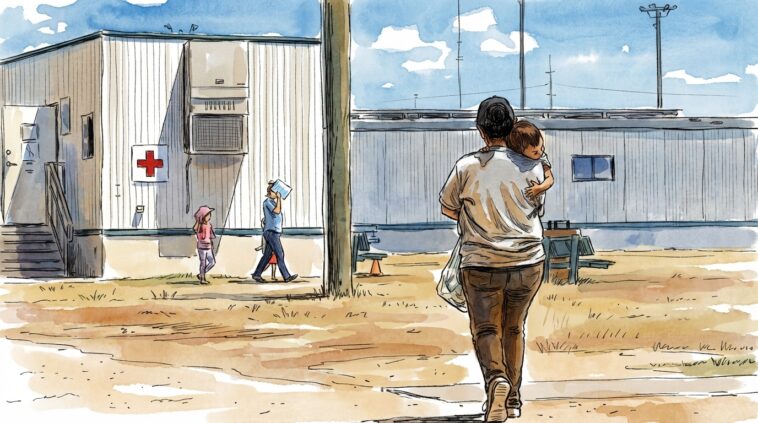

Examining Justice and Conditions in Texas Family Detention Centers
The ongoing debate over the treatment of immigrant families in U.S. detention centers has long been a heated subject. Recent first-hand accounts from Texas facilities have revealed stories of children and adults fighting over scarce resources, such as clean water, and children suffering due to reductions in access to essential medical examinations. In this opinion editorial, we take a closer look at the tangled issues present in these detention centers, the legal challenges they face, and the broader implications for immigration policies in the United States.
Unsettling Reports: Children and Adults Struggling Over Limited Resources
Several testimonies emerging from Texas family detention centers report that adults and children are involved in nerve-racking struggles for clean water. These accounts, backed by legal motions filed by immigrant advocates, indicate that families in detention often encounter conditions that are both confusing and concerning. Descriptions of toddlers experiencing distress, a child with swollen feet denied further medical attention, and witnesses of physical altercations over water supplies paint a picture of facilities that are far from meeting the safe and sanitary conditions mandated by previous legal agreements.
The accounts suggest that many families have faced inadequate responses from those overseeing the facilities. For example, some detainees report that even basic needs like ensuring clean water for infant formula have gone unmet. These reports are not just isolated incidents but signal potential systemic issues that require urgent attention.
Legal Safeguards: The Role of the Flores Settlement Agreement
A key legal element in the ongoing discussion is the Flores Settlement Agreement, a framework established in the 1990s which requires immigrant children to be held in safe and sanitary conditions when detained by federal authorities. Advocates argue that dismantling this agreement would remove accountability and oversight, risking a deterioration in the conditions experienced by some of society’s most vulnerable individuals.
Critics of proposed changes to the Flores Agreement point out that if lawmakers allow the detention time to become indefinite and if facilities are allowed to operate without stringent oversight, the current troubling conditions could worsen dramatically. With the Flores Agreement in place, legal observers and monitors are given access to detention centers to document conditions. Without it, the ability to document and address issues would be severely hampered, making it harder to figure a path through the many legal and operational puzzles these centers present.
Tangled Issues of Water Scarcity and Inadequate Medical Care
One of the most disturbing elements emerging from these Texas facilities is the struggle for access to essential resources. Several detainees have testified to the lack of sufficient and quality water, and children have reportedly been left without proper medical attention.
For instance, one mother recounted the distress of having to use tap water for infant formula, an act that eventually led to severe dehydration and other health complications for her 9‐month‐old child. In another instance, a 16-year-old girl shared that the scramble for water sometimes turned physical, with adults pushing aside younger siblings to secure a share of the available supply. These troubling accounts indicate that the management of facilities may be overlooking even the most basic necessities.
Below is a summary of key issues reported by families:
- Insufficient clean water supply for daily needs and infant formula preparation
- Denial or delay of medical examinations for children facing health issues
- Overcrowding in detention centers, which further complicates access to resources
- Reports of physical altercations as detainees struggle to secure basic provisions
The combination of these factors points to a system that is struggling to meet the needs of its detainees. The legal and administrative framework governing these centers must address these problems head on, rather than diverting attention to political or bureaucratic maneuvering.
Shifts in Immigration Enforcement: From Border to Internal Operations
Until recently, much of the public debate on immigration focused on the border. However, there is now an evolving shift toward internal operations. Many of the families detained at Texas facilities are not new arrivals from abroad—they have been living in the country for years. This change in the demographic composition of detainees has significant implications for the overall operation and oversight of detention centers.
White House officials have announced plans to increase internal arrests dramatically, with new targets set at many more arrests per day than before. As these facilities face potential surges in detainee numbers, the already overwhelming, off-putting conditions could become even more challenging. With capacity issues looming at centers designed for only a fraction of the current incarceration numbers, critics worry that current practices may soon buckle under the increased demands.
In managing the future rise of immigrant arrests, the following key points need to be considered:
- The sudden growth in detention numbers is likely to exacerbate existing problems, including resource scarcity and inadequate medical care.
- Facilities already understaffed or lacking in proper infrastructure may struggle to safely accommodate a much larger inmate population.
- Without ongoing oversight through agreements like the Flores Settlement, documentation of conditions could become more limited, further eroding accountability.
- The potential for increased internal operations suggests that policy makers must urgently address facility management before numbers spike further.
This transformation in enforcement strategy serves as a reminder of the delicate balance between immigration control and the need to preserve human rights within detention centers.
Legal Implications of Policy Changes and the “Big, Beautiful” Bill
The legal debates surrounding detention center practices have recently been ignited by proposals in a far-reaching piece of legislation sometimes referred to by its proponents as the “big, beautiful” bill. Designed to offer tax breaks and spending cuts, this legislation also includes poignant calls for indefinite detention periods. Opponents argue that such changes would clash directly with the Flores Settlement Agreement and could lead to severe degradation in the conditions that detained families experience.
Legal advocates emphasizing the importance of transparent oversight argue that dismantling or undermining established agreements is like opening the door to a host of “tangled issues” in the detention system. They contend that the children’s rights and well-being are at stake, and any policy that compromises these values must be revisited with caution. The proposed measures, though claimed to be geared toward fiscal responsibility and increased immigration enforcement, might instead create a system loaded with issues that will be hard to reverse in the future.
To underscore the difference in these legal approaches, an analysis table below summarizes the key features of the current oversight versus the proposed changes:
| Aspect | Current Framework (Flores Agreement) | Proposed Changes |
|---|---|---|
| Detention Duration | Time limits in place, ensuring temporary detention | Potential for indefinite detention |
| Oversight and Transparency | Regular monitoring by legal advocates and independent bodies | Risk of reduced access and less accountability |
| Condition of Facilities | Mandated safe and sanitary standards | Conditions could deteriorate without strict regulation |
| Legal Recourse | Structured channels for grievances and legal challenges | Possible erosion of rights and diminished legal protections |
This comparison highlights the stark differences between maintaining long-established oversight versus adopting policies that might be too intimidating to put into practice without severe unintended consequences.
The Impact of Overcrowding on Healthcare and Child Welfare
Overcrowding in detention centers represents one of the most problematic challenges that administrators face. As families are crammed into facilities not designed for high volume, the quality of care provided inevitably falls short. In many cases, reports have surfaced regarding children missing vital appointments, important medical examinations being postponed or entirely denied, and overall health care being reduced to a level that can only be described as off-putting.
Such problematic conditions not only affect physical health but also have long-term psychological effects on children and their family members. One somewhat distressing report involved a young boy with a serious medical condition whose treatment was disrupted, leading to a relapse. Another report recounted the trauma experienced by a toddler after witnessing armed agents entering a relative’s home. These accounts paint a picture of a system where the pressure to manage increasing numbers is leading to a cascade of negative health outcomes.
Child welfare advocates stress that, in addition to physical health, the mental well-being of detained children is equally important. For instance, one mother disclosed that her 3-year-old son began to exhibit self-harming behavior after experiencing the harsh realities of detention. It is clear that when detention centers become overburdened, the hidden complexities of psychological trauma among children and other vulnerable detainees become difficult to manage.
The following bullet list details some of the common healthcare and welfare issues encountered in crowded detention facilities:
- Missed appointments with pediatricians and specialists due to administrative delays
- Inadequate treatment of chronic conditions, leading to relapses and dire complications
- Lack of mental health support for both adults and children experiencing extreme stress
- Physical injuries or worsening of existing conditions due to neglect or oversight
- Inconsistent access to clean water and nutritious food, compounding existing health problems
These points are a stark reminder that the current practices in these detention centers are struggling to meet even the most basic health and welfare needs, and that legal frameworks must be strengthened to ensure that all detainees receive critical care.
Legal Battles Ahead: The Future of the Flores Settlement Agreement
The Flores Settlement Agreement has long served as a safeguard in ensuring that immigrant children are detained under humane conditions. However, the current political and legislative environment casts doubt on its future. With proposals that seek to relax or remove these protections, the legal community is bracing itself for a series of challenging court battles.
Critics of proposed legislative changes warn that abandoning the Flores Agreement would not only undermine children’s rights but also remove a key accountability mechanism that has historically provided a window into the day-to-day operations of detention facilities. In the absence of such oversight, it would become increasingly difficult to poke around the actual conditions, making it easy for dangerous practices to go unmonitored.
Legal experts have pointed out several potential consequences if changes to the Agreement are implemented:
- Loss of transparency, leading to reduced public awareness of conditions within detention centers
- Increased risk of unchecked violations of sanitation, safety, and healthcare standards
- A legal landscape that may not offer adequate avenues for redress to families when rights are infringed upon
- Potential international criticism as the U.S. could be seen as diminishing its commitment to human rights
For advocates pushing for the preservation of the Flores Agreement, the coming months will be crucial. The government is expected to have an opportunity to file a reply brief, and a hearing scheduled for mid-July could set the precedent for how immigrant detention is managed in the future. The legal community is watching closely, knowing that the outcome will have a super important impact on both policy and practice nationwide.
Understanding the Broader Immigration Debate and Its Legal Implications
While the current focus has been on the conditions within Texas detention centers and the legal challenges surrounding the Flores Agreement, it is important to recognize that this is only one aspect of the broader immigration debate. Changes in enforcement strategies—shifting from border arrests to internal operations—represent just one of the many twists and turns in a policy area that is loaded with problems and competing priorities.
A balanced legal analysis must consider multiple aspects, ranging from resource allocation and administrative competence to the basic rights of those detained. The debate touches on several tricky parts of American law, including:
- Constitutional rights and the protection of detainees under U.S. law
- The role of executive power in shaping immigration policy
- The responsibilities of private corporations operating detention facilities, and the regulatory oversight applicable to them
- The evolving nature of public opinion, particularly in a politically charged climate where policy decisions are often viewed through ideological lenses
All these dimensions mean that any changes to immigration policy or detention practices must be approached with careful consideration. The ongoing debates are a reminder that successful legal reform often requires not just bold policy statements, but also a deep understanding of the subtle details and fine shades that define the legal landscape.
Analyzing the Policy Changes: A Look at the “Big, Beautiful” Bill
The proposed legislation, colloquially known among advocates as the “big, beautiful” bill, aims to enact sweeping changes across the immigration enforcement sector. While the promise of tax breaks and spending cuts has garnered support in certain quarters, these benefits come with serious trade-offs. One of the most contentious aspects of the proposal is its provision for indefinite detention of immigrant families—an aspect that directly contradicts the spirit of the Flores Settlement Agreement.
Detention facilities under the current framework are expected to operate under strict oversight, with limits placed on how long individuals, particularly children, can be held. Extending detention times indefinitely not only changes the operational dynamics of these facilities but also places increased pressure on already overburdened centers. The potential consequences include:
- A marked deterioration in the standard of care as facilities try to manage larger populations over longer periods
- Heightened risks of abuse and neglect, as prolonged detention exposes children and families to stressful conditions without timely redress
- A shift in the overall legal landscape in which judicial oversight becomes more challenging, reducing opportunities for legal intervention
This new legislative direction forces policymakers to take a closer look at how well current facilities are equipped to deal with an expanded detainee population, and whether they can continue to meet legal and human rights standards. Critics argue that such moves, while intended to tighten immigration controls, could ironically lead to a more chaotic and unaccountable system.
Managing Expectations Amidst Escalating Enforcement Efforts
Recent announcements from immigration officials hint at a steep increase in daily arrests, which could see numbers balloon from around 650 to 3,000 in a single day. This massive uptick in enforcement is poised to stress the system in ways that many legal analysts find alarming. Managing such a dramatic increase means that detention centers may soon face conditions that are not only overwhelming but also rife with dangerous complications.
Administrators and legal advocates alike caution that, without adequate resources and rigorous oversight, these centers could quickly become breeding grounds for further human rights violations. In an environment already loaded with problems, a surge in detainee numbers could result in:
- Further overcrowding, leading to even scarcer resources and less personal space for every detainee
- Reduced access to medical and legal services, as staff and resources are stretched thin
- An increase in the potential for conflicts among detainees due to heightened competition for basic necessities
- A greater burden on already limited oversight mechanisms, making it harder to track compliance with legal mandates
These outcomes would not only have immediate effects on those in detention but could also spark long-term legal and political battles over the nature of immigration enforcement in America.
Prioritizing Transparency and Accountability in Detention Practices
Transparency and accountability are often cited as must-have principles in the management of detention centers. Under the current regime established by the Flores Settlement Agreement, regular monitoring by human rights organizations and legal advocates has played a key role in ensuring that officials remain answerable for the conditions within these facilities.
Without ongoing oversight, however, there is a genuine risk that the conditions noted in recent testimonies could worsen. Legal observers argue that the following measures should be considered essential components of any updated immigration enforcement policy:
- Maintaining open channels for independent monitoring of detention facilities
- Ensuring that all detainees have regular access to medical examinations and legal counsel
- Implementing a robust complaint mechanism that allows families to report concerns without fear of retaliation
- Requiring detailed public reporting of conditions and outcomes within each facility to allow for external review
These steps would help re-establish a clear accountability framework, enabling all relevant parties to find their way through the administrative and legal maze more effectively. In a system already facing many tricky parts, maintaining strong oversight is not just a legal necessity—it is also a moral imperative.
Systemic Challenges: Staffing, Training, and Resource Allocation
Beyond the legal and oversight issues, the systemic challenges affecting detention centers are also worth exploring. One of the more puzzling bits is how facilities continue to be understaffed and under-resourced despite the public scrutiny they have faced over the years. Reports indicate that many centers are operating at a fraction of their intended capacity, yet they are increasingly forced to handle a greater workload as numbers swell.
Key challenges in this area include:
- Insufficient staffing levels, which compromise both security and the quality of care provided to detainees
- Lack of comprehensive training for staff to deal with the unique needs of immigrant families, including mental health challenges
- Budgetary constraints that limit the ability of facilities to acquire additional supplies or improve infrastructure
- Difficulty in coordinating between federal agencies, private companies, and advocacy groups tasked with managing detainee welfare
Addressing these tricky parts requires more than just policy declarations—it demands a redistributive approach to resources. Without adequate investment in staffing, training, and infrastructure, any legal guarantees of humane treatment may remain largely theoretical.
Charting a Way Forward: Policy Recommendations and Legal Reforms
Given the complex and multifaceted nature of the challenges faced by Texas family detention centers, it is clear that a series of both legal and managerial reforms is needed. While there are no easy fixes, several key recommendations stand out as super important steps to restoring order, accountability, and humane treatment:
- Preserve and strengthen existing legal protections: Upholding agreements like the Flores Settlement is critical to ensuring that detainees receive safe and sanitary treatment. Congress should refrain from enacting policies that could dismantle these hard-won protections.
- Increase oversight and transparent reporting: Regular independent monitor visits and public disclosure of conditions should become the benchmark rather than the exception.
- Invest in staffing and facility improvements: Allocating additional resources to detention centers can help manage growing numbers and reduce the strain on existing infrastructure.
- Enhance healthcare access and training: Comprehensive training for staff on both physical and mental healthcare needs, as well as timely access to medical services for detainees, is essential for mitigating the impact of overcrowding.
- Create clear channels for legal redress: Families should have immediate and safe access to legal counsel to tackle any grievances, ensuring that rights are not trampled in the process.
Adopting these recommendations will not magically resolve all issues, but it will provide a framework for working through the many tangled issues that currently hamper the effective functioning of detention centers. Both legal advocates and policymakers need to take a closer look at these proposals if they are serious about upholding the dignity and rights of immigrant families.
Conclusion: Striking a Balance Between Enforcement and Human Rights
The stories emerging from Texas family detention centers serve as a poignant reminder of the human cost embedded in large-scale immigration enforcement policies. While it is necessary for governments to enforce immigration laws, doing so must not come at the expense of the rights and welfare of those detained. The experiences of families who report scarred experiences—ranging from struggling to secure clean water to suffering through inadequate medical care—underscore the need for policies that balance security with compassion.
The Flores Settlement Agreement has long provided a legal mechanism to ensure that these basic human rights are maintained. As legislative battles loom and proposals such as the “big, beautiful” bill threaten to radically alter the current framework, it becomes ever more critical to examine both the legal and practical implications of such changes.
In a system fraught with issues that are both overwhelming and confusing, finding a path forward requires a careful weighing of priorities. While immigration enforcement is a key area of national policy, it is equally critical that humane treatment, transparent oversight, and accountability are not sacrificed in favor of administrative convenience or political expediency.
Ultimately, the future of detention practices in America hinges on the willingness of policymakers and legal experts to work through the tricky parts and tangled issues with a mindset that honors both law and humanity. The stakes are high—not just for the individuals detained in these facilities, but for the integrity of the legal system and the broader society that insists on fairness and justice for all.
As we look to the coming months, court hearings and legislative debates will likely shape the future landscape of immigration detention in the United States. It is our hope that, in this process, the voices of those who have suffered and continue to suffer under these tough conditions are heard, and that their experiences help guide us toward a more transparent, accountable, and humane solution.
Originally Post From https://ktar.com/national-news/new-insight-into-texas-family-detention-reveals-adults-fighting-kids-for-clean-water/5720017/
Read more about this topic at
New insight into Texas family detention reveals adults …
Texas family detention center witnesses describe adults …