
Modular Housing Innovation: A Roadmap for Repurposed Container Living
As society grapples with the tangled issues of family homelessness in a digital era, a groundbreaking project called Legacy Village emerges as a beacon of hope. This transitional housing community, built from repurposed ocean containers, offers a sustainable and replicable model designed to support families in need. The initiative by Family Promise of Greater Phoenix is not only innovative but also provides a blueprint for how creative design and community partnerships can combat housing challenges.
Legacy Village is a striking example of how modular housing solutions can turn what might seem like intimidating challenges into manageable projects. By converting standard 640-square-foot ocean containers into fully furnished small apartments, the project transforms industrial materials into warm, livable spaces that offer dignity and security. In doing so, it finds a path through the often overwhelming twists and turns of providing affordable housing in today’s climate.
Repurposed Shipping Containers: Embracing a New Approach to Housing
The idea of repurposing shipping containers for residential use has been gaining momentum in recent years as urban planners and community leaders dig into innovative ways to tackle housing shortages. The Legacy Village project stands out because it leverages readily available materials that are both cost-effective and energy-efficient. Each unit is fitted with solar power, LED lighting, and high-efficiency HVAC systems—a combination that not only ensures sustainability but helps cut down on long-term utility costs for residents.
The design of these units revolves around creating a safe, comfortable, and community-centric environment. Legacy Village is strategically built around a central courtyard that fosters neighborly interaction and creates a warm communal atmosphere. Additional facilities such as playgrounds and sports courts add to the appeal, turning a collection of repurposed containers into a vibrant, interactive space for families.
Community-Centered Design and Its Broader Implications
It is critical to recognize that Legacy Village was not built solely as a housing project—it is a community effort. The design includes communal spaces that encourage social interaction, which is of utmost importance for families emerging from homelessness. The idea is to create a neighborhood where residents can support one another and build a foundation for long-term stability.
By focusing on community-centered design, the project simplifies the complicated pieces of homelessness remediation. It provides a model that other communities can adapt. This approach allows cities and charitable organizations to find their way through the less-than-obvious twists and turns of affordable housing development. The transformative effect of such a design is that it addresses both the immediate requirement for shelter and the essential need for community support.
Sustainable Living: Energy Efficiency and Environmental Impact
The environmental aspects of Legacy Village are not to be overlooked. Each housing unit is outfitted with energy-efficient systems, which include modern solar panels, LED lighting designed to reduce energy waste, and highly efficient HVAC installations that ensure comfort during the extreme weather prevalent in many parts of the country. In leveraging these sustainable features, Legacy Village serves as a critical stepping stone towards eco-friendly housing solutions.
This sustainable design demonstrates that providing stable, affordable housing for low-income families can go hand-in-hand with a commitment to preserving the environment. The project’s energy-saving attributes not only contribute to the overall reduction of carbon footprints but also serve as a model for other programs striving to counter both housing insecurity and environmental degradation.
Energy-Efficient Upgrades: Maximizing Benefits for Residents and the Environment
One of the most inspiring aspects of Legacy Village is its careful attention to the energy requirements of modern housing. The incorporation of solar power and energy-efficient lighting reduces the overall operational costs and provides a permanent reminder that even on the smallest scales, sustainable practices make a big difference. Residents benefit from lower bills, while the community and environment reap the rewards of reduced energy consumption.
Below is a summary of the key energy-efficient features integrated into the Legacy Village project:
| Feature | Benefit |
|---|---|
| Solar Power Panels | Reduces dependence on conventional energy sources and lowers utility costs |
| LED Lighting | Minimizes electricity usage while providing effective illumination |
| High-Efficiency HVAC Systems | Ensures comfortable living conditions with minimal energy expense |
By implementing these upgrades, Legacy Village demonstrates its commitment to a sustainable future for both its residents and the environment. This model signals a move towards systems that not only support immediate needs but also prepare communities for long-term prosperity through responsible energy use.
Innovative Housing Models: Addressing the Needs of Transitional Living
Family Promise of Greater Phoenix, a long-standing nonprofit organization, has spent over 25 years working to break the cycle of homelessness. With the launch of Legacy Village, the organization offers more than just shelter—it provides a foundation from which families can begin to rebuild their lives with dignity and hope. This transformational project proves that innovative housing models can provide stable interim solutions for vulnerable populations.
By creating a model that is both replicable and scalable, Legacy Village is positioned to act as a framework for other communities seeking to address similar challenges. This endeavor showcases that even in the face of confusing bits of modern bureaucracy and tangled issues surrounding affordable housing, forward-thinking projects can serve as an alternative path.
Advantages of a Replicable Modular Design
The decision to utilize modular housing constructed from repurposed ocean containers is not just a trendy design choice—it offers concrete benefits for scalability and cost efficiency. The modular design simplifies several of the tricky parts involved in traditional construction, particularly in urban settings, where space and funding maps can be nerve-racking to tackle.
Key advantages include:
- Cost-Effectiveness: Using repurposed materials lowers overall construction costs and allows funds to be redirected to other aspects of community support.
- Time Efficiency: The streamlined process of modifying shipping containers enables faster project completion times, which is critical when families need prompt shelter.
- Scalability: The model is designed for replication. With a successful pilot in Glendale, there is a real possibility of creating multiple similar communities across the region.
- Sustainability: Repurposing existing materials and employing green technology means that the environmental impact is kept to a minimum.
These benefits highlight how adaptive modular designs can offer a path through many of the overwhelming issues that typically hinder the development of affordable housing. The success of Legacy Village could inspire both public and private organizations to figure a path forward in addressing the broader challenges of family homelessness.
Community Partnerships: Collaborative Efforts to Combat Homelessness
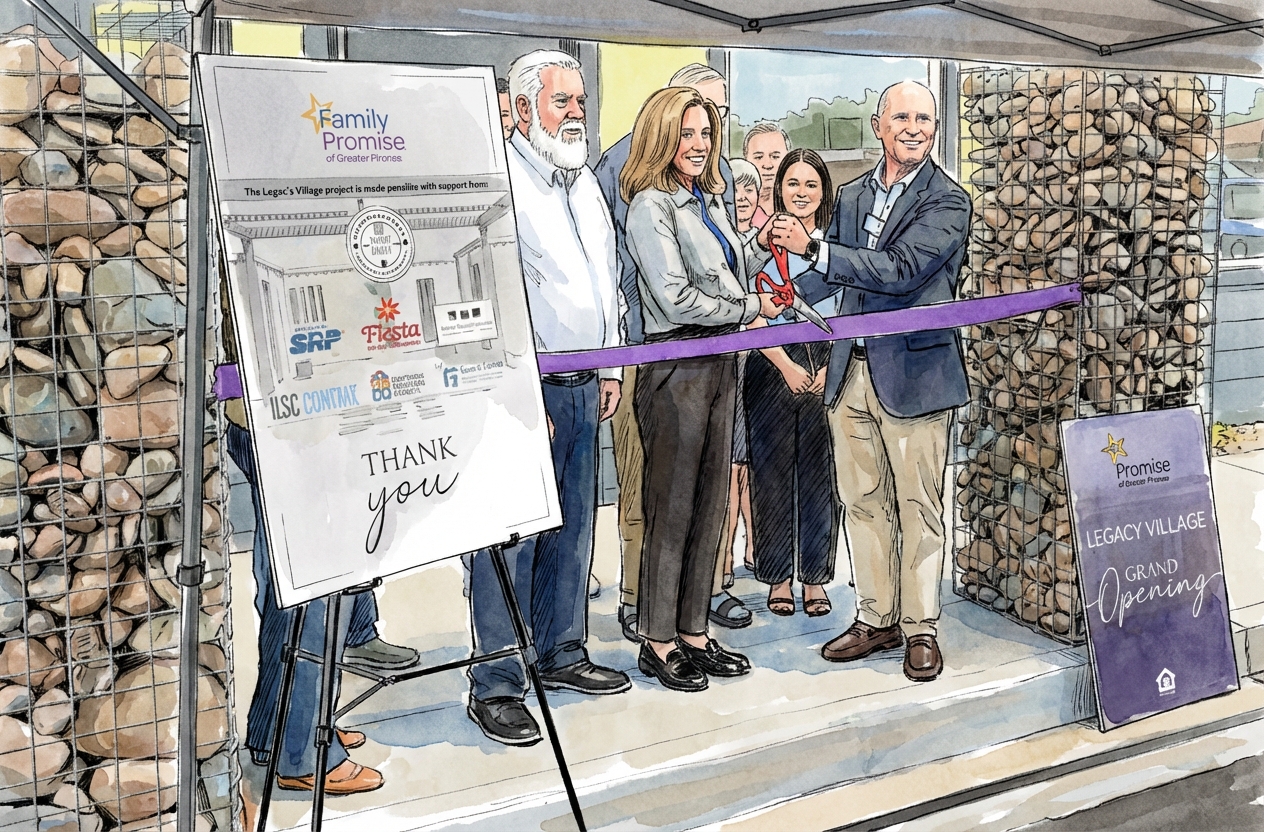
Legacy Village is the product of collaboration among various stakeholders, spanning from local government bodies to philanthropic organizations. The combined efforts of partners such as BHHS Legacy Foundation, Local Initiatives Support Corporation, Garcia Family Foundation, Fiesta Bowl, The Nina Mason Pulliam Charitable Trust, SRP, and the Arizona Housing Fund have turned a complex idea into a tangible solution.
Such partnerships illustrate that, when multiple entities work together, the intimidating pieces of funding, planning, and implementation can be made manageable. It is a powerful demonstration of how community collaboration can break down the confusing bits of bureaucratic red tape and technical hurdles associated with housing projects.
Effective Collaboration: How Public and Private Sectors Contribute
Public and private collaboration is at the heart of Legacy Village’s success. A closer look at the contributors reveals how each one adds value to the project:
- Local Government: The City of Glendale has been instrumental in facilitating permits, providing access to property, and offering logistical support.
- Philanthropic Organizations: Foundations and charitable trusts contribute not only financial support but also strategic guidance, ensuring that the project meets community needs.
- Corporate Partners: Companies like SRP provide the technical know-how and resources necessary to incorporate sustainable energy solutions effectively.
- Nonprofit Organizations: Family Promise of Greater Phoenix gathers expertise in offering transitional housing and comprehensive support to affected families.
This well-rounded approach shows that addressing homelessness is not a problem for a single entity to bear. Instead, it is a collective effort that requires contributions from diverse groups, each playing a key role. When everyone works together, the overlapping and often intimidating hurdles can be better managed, creating a safer and more supportive environment for families.
Transitional Living: A Stepping Stone to Long-Term Stability
Legacy Village represents more than just a temporary shelter—it is a stepping stone for families striving to achieve long-term stability. Transitional housing addresses the delicate balance between stability and self-sufficiency. Families who have experienced homelessness often face overwhelming challenges that complicate their immediate needs. Legacy Village provides a platform from which these families can regain control over their lives.
The concept of transitional living involves offering stable, affordable housing that bridges the gap between homelessness and permanent housing. It is essential for reducing the stress associated with the sudden loss of a home and provides the headspace families require to rebuild their lives. This initiative does not simply offer shelter—it provides a pathway to a more hopeful future.
Services and Support Systems: Building a Foundation for Success
While Legacy Village focuses on providing shelter, the broader initiative by Family Promise of Greater Phoenix includes an array of supportive services aimed at promoting self-reliance. Such services may include:
- Counseling Services: Helping residents cope with the stress and nerve-racking effects of past homelessness experiences.
- Job Placement Programs: Assisting families in finding steady employment, which is key to developing long-term financial independence.
- Educational Opportunities: Offering workshops and educational seminars that address the fine points of financial management and job skills.
- Community Integration Programs: Facilitating social activities and community-building efforts that help families create new support networks.
By bundling housing with these supportive services, Legacy Village serves the dual purpose of providing a safe haven and empowering residents to gain the skills and confidence needed to rebuild their lives. Each of these offerings is designed to smooth the often intimidating progression from crisis intervention to sustainable independence.
Scaling the Model: Replication and Future Prospects
An essential aspect of Legacy Village’s design is its replicability. With only a small fraction of available affordable transitional housing units relative to the number of families in need, a scalable solution is imperative. This modular approach has been designed with scalability in mind, ensuring that once the concept is refined and proven in Glendale, it can be duplicated across other suitable properties in the region.
Scaling the model is not without its challenges. However, by addressing the complicated pieces of construction, funding, and community collaboration in a systematic way, Family Promise of Greater Phoenix has demonstrated that finding a replicable path is within reach. The initiative paves the way for more communities to explore innovative solutions that turn the tide on family homelessness.
Key Considerations for Future Expansion
There are several factors to consider when planning to replicate the Legacy Village model in different regions. These include:
- Site Selection: Identifying properties that can accommodate a modular housing design with space for communal amenities.
- Local Partnerships: Establishing robust collaborations with local governments and organizations to navigate the administrative and logistical twists and turns.
- Funding and Resources: Securing the necessary financial and material resources to maintain the project’s standards of affordability and sustainability.
- Customization of Services: Tailoring supportive services to address the unique challenges faced by families in each locality, ensuring the model works well in a variety of contexts.
By taking these factors into account, the replication of Legacy Village can evolve into a broad network of supportive communities. Each new development will serve as a testament to the potential of combining creative housing solutions with dedicated support services in order to mitigate the full spectrum of family homelessness challenges.
Breaking Down Barriers: Policy and Advocacy Implications
The success of innovative projects like Legacy Village carries with it significant implications for housing policy and advocacy. Policymakers are increasingly called upon to consider alternative forms of housing that address the tricky parts of affordability, sustainability, and social equity. Traditional models often fall short when faced with the overwhelming scale of the current housing crisis. Legacy Village challenges these outdated notions by presenting an off-putting yet refreshingly simple solution that leverages modern design and energy efficiency.
Advocates for affordable housing believe that such innovative models can catalyze change at a larger policy level. The project serves as a case study for how public policy can support alternative technologies and building methods. Rather than getting stuck in the maze of conventional approaches, local governments can learn from Legacy Village’s success and make their regulations more accommodating for next-generation housing initiatives.
Policy Recommendations to Support Innovative Housing
Based on the experience of Legacy Village, there are several policy recommendations that could help broaden the scale of such projects:
- Incentives for Sustainable Construction: Offer tax credits or other incentives for projects that incorporate renewable energy and energy-efficient technologies.
- Streamlined Permitting Processes: Simplify the bureaucratic twists and turns involved in housing development by creating fast-track permitting for innovative housing models.
- Public-Private Partnerships: Encourage collaboration among government agencies, nonprofits, and private firms to share the burden of funding and regulatory challenges.
- Community Engagement Initiatives: Promote policies that actively involve community members in the planning process, ensuring that housing solutions are tailored to local needs.
These recommendations serve as a reminder that forward-thinking policies can turn the initiative of projects like Legacy Village into a national movement. With proper support, similar innovative housing projects could evolve into a network of sustainable communities that not only offer shelter but also promote long-term stability, community well-being, and environmental responsibility.
Challenges and the Road Ahead: Overcoming Obstacles
No innovative project is without its hurdles. Legacy Village, despite its promising design and groundbreaking approach, faces a range of obstacles that could complicate its expansion. The project exists in an era when addressing family homelessness is loaded with problems that extend beyond simple construction logistics. Issues such as funding sustainability, community integration, and local zoning regulations remain significant challenges.
Nonetheless, by working through these overwhelming issues one step at a time, the stakeholders have managed to steer through many of the nerve-racking complications that typically hamper affordable housing projects. The proactive collaboration between Family Promise of Greater Phoenix, local government officials, and funding partners has enabled the project to move forward despite the twists and turns that inherently accompany such ambitious initiatives.
Identifying and Addressing the Tricky Parts
The success of Legacy Village depends on a clear-eyed understanding of the tricky parts involved in its design and execution. These include:
- Securing Ongoing Funding: Long-term financial sustainability is essential. Continuous investment in both infrastructure and supportive services is a key factor that requires ongoing commitment from both public and private sectors.
- Community Integration: Transitioning from a state of homelessness to stable living involves re-integrating families into communities. Addressing the emotional and social challenges associated with this transition is critical.
- Regulatory Hurdles: Zoning laws and building codes often present additional obstacles that require creative problem-solving and persistent advocacy.
- Replicability Challenges: While the modular design is crafted for replication, adapting the model to diverse geographical and socio-economic landscapes involves figuring a path around the subtle differences inherent in each community.
By acknowledging these obstacles and addressing them head-on, initiatives like Legacy Village can serve as learning experiences that guide future projects. Every challenge overcome contributes to a clearer blueprint for how modular, sustainable housing can evolve into a mainstream solution to family homelessness across the nation.
The Human Element: Rebuilding Lives and Communities
At the heart of the Legacy Village project is the determination to help families rebuild their lives with dignity. Transitional housing is much more than a roof over one’s head—it is about restoring hope and fostering an environment where families can start afresh. The physical structure of repurposed containers is a means to an end, and that end is the transformation of lives that have been marked by instability and despair.
Residents who have overcome the nerve-racking challenges of homelessness now find themselves in a setting that supports growth, community involvement, and personal empowerment. Legacy Village stands as a testimony to the power of innovative housing solutions when combined with compassion and comprehensive support services.
The Impact on Residents: More Than Just Walls and a Roof
Legacy Village offers residents:
- A Stable Environment: Providing a consistent, secure place to call home helps families build routines and secure employment.
- Access to Services: Integrated support systems help with everything from job training to mental health counseling, ensuring that the emotional and practical needs of residents are met.
- A Sense of Community: With shared spaces such as central courtyards, playgrounds, and sports courts, residents can form essential social bonds that help them on the long, winding road to recovery.
- An Opportunity to Reinvest in Themselves: Stability offers families the chance to improve their educational and professional prospects, setting the stage for long-term success.
These layers of support underscore the importance of considering the human element in discussions about affordable housing. Legacy Village is not just a construction project—it is a community-building initiative that perfectly illustrates how addressing the subtle details of personal and social well-being can transform lives.
Advancing the Debate: The Case for Modular, Sustainable Housing
The evolution of Legacy Village contributes significantly to the national conversation about how best to address homelessness and affordable housing shortages. By providing a replicable and energy-efficient model, the project challenges traditional methods and invites policymakers, community leaders, and the private sector to re-evaluate established housing paradigms.
The success of such modular and adaptable housing solutions should prompt further exploration and experimentation in alternative building methods. The approach taken by Legacy Village offers important lessons about how to find your way through the tangled issues of housing insecurity while ensuring that every family is given a chance to rebuild their lives with respect and dignity.
Key Takeaways for Stakeholders and Policymakers
Several important lessons emerge from the Legacy Village project that can inform broader policy and practical approaches:
- Innovation is Essential: The use of repurposed shipping containers demonstrates that innovative thinking can help overcome some of the most intimidating challenges in the affordable housing sector.
- Sustainability Works: Energy-efficient features not only help reduce environmental impact but also offer tangible economic benefits for residents.
- Collaboration Yields Results: Successful execution relies on a robust network of public and private partners who are ready to tackle the overwhelming aspects of financing, regulation, and community integration together.
- Replicability is Critical: A scalable and replicable model is needed to address the expansive scope of family homelessness effectively and to inspire similar projects nationwide.
These takeaways lay the groundwork for a new perspective in public policy, one that embraces modular construction, sustainable living, and community collaboration as core strategies for improving housing outcomes. By shifting the focus from traditional, often rigid approaches to more creative and adaptive solutions, society as a whole can benefit in the long run.
The Path Forward: Embracing a Future of Hope and Innovation
Legacy Village is more than an experimental housing project—it is a testament to the progress that can be made when communities work together to solve pressing social issues. As an opinion editorial, it is important to recognize both the achievements and the ongoing challenges that lie ahead in the realm of transitional housing for families.
The initiative forces us to think beyond conventional frameworks and to appreciate the benefits of innovative design, sustainable development, and community engagement. As families step into these new spaces, they are not only reclaiming stability but also setting the stage for durable transformation. The approach taken here encourages other organizations and municipal leaders to figure a path forward in today’s fast-changing social landscape.
Looking to the Future: Areas for Continued Development
There are still several areas where continued investment and creative thinking will prove critical. These include:
- Enhancing Support Services: Expanding the range of available services—from mental health support to educational programs—can help ensure that residents are well-equipped to handle the nerve-racking aspects of transitioning to permanent housing.
- Deepening Community Ties: Further efforts to foster social cohesion and neighborhood integration can mitigate the isolating effects often experienced by those emerging from homelessness.
- Policy Reforms: Continued advocacy for policy shifts at local and state levels is necessary to remove overly complicated barriers to innovative housing solutions.
- Technology Integration: Leveraging digital tools for monitoring energy usage and managing community resources efficiently can enhance the sustainability and functionality of such housing projects.
These developments are super important to ensure that the promising beginnings represented by Legacy Village translate into long-lasting change across other communities facing similar challenges.
Conclusion: A New Chapter in Addressing Family Homelessness
Legacy Village stands as a groundbreaking model that has transformed the conversation around affordable housing and family homelessness. By implementing repurposed shipping containers, sustainable energy solutions, and community-focused design, the project has demonstrated that it is entirely possible to overcome the intimidating hurdles of housing insecurity.
This innovative approach, developed by Family Promise of Greater Phoenix, is a source of inspiration for communities across the nation. The blend of smart design, strategic public-private collaboration, and comprehensive support services illustrates that even the most complicated puzzles of affordable housing can be broken down into manageable pieces. With continued investment, policy adjustments, and community engagement, it is entirely possible to usher in a future where every family has access to safe, secure, and dignified housing.
As stakeholders and policymakers take a closer look at the Legacy Village project, there is ample reason for optimism. The initiative not only provides an immediate solution to family homelessness but also sets a replicable standard for future projects. It is a call to action—for every community, every government, and every individual passionate about social justice—to embrace innovation and sustainability as the cornerstones of effective housing policy.
In a world where the challenges of homelessness feel especially overwhelming, Legacy Village offers a clear example of how we can move forward. By combining modular design with energy-efficient techniques and by ensuring that the human element remains at the forefront, this model ensures that progress is not just a lofty goal but a tangible reality. It is a reminder that even when faced with the confusing bits of economic uncertainty and the nerve-racking issues of affordable housing, there are ways to create long-term, transformative change.
Ultimately, Legacy Village is a transformative milestone—a practical and compassionate answer to the needs of today’s families, and a promising blueprint for tomorrow. By championing innovative housing solutions and prioritizing community and sustainability, this project paves the way for a future where every family can look forward to a stable, secure, and hopeful home.
Originally Post From https://arizonadigitalfreepress.com/family-promise-of-greater-phoenix-opens-doors-to-legacy-village/
Read more about this topic at
Repurposing Shipping Containers: Creative And …
Revelution Containers & S. I. Container Builds
